Hospitals Where Babies React Animal Hospitals for Babies Lie in
The birth of a babe or the adoption of a new kid is associated with a great deal of anxiety, excitement, and stress for not simply the family unit, but besides the family pet. Some dogs and cats can have a hard time adjusting to these changes, especially if this is your starting time child, but preparation and planning will aid.
How is my pet probable to reply to the new inflow? 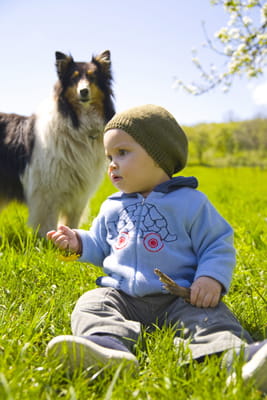
There are and then many unlike variables that it is impossible to accurately predict the way that any pet might get forth with children. Even so, there are considerations that requite some insight into how your pet might react, such as:
- How much exposure has your pet had previously to children?
- How has your pet reacted when it has been exposed?
- How agitated is your pet past schedule and social changes?
The most serious concern would be with a pet that has previously reacted aggressively or fearfully with children. If there accept been prior bug, y'all should consult with a veterinary behaviorist to make up one's mind which situations have previously led to aggression, and the safest style, if any, to make the transition. If the pet'due south previous problems were with a specific child, a specific age grouping or under specific circumstances, it may be possible to design a program that emphasizes safety and works to adapt the pet gradually to stimuli and situations that are similar to the previous situations in which the pet was aggressive to a child. A desensitization and counter-conditioning program may meliorate or resolve the pet's anxiety prior to the inflow of the child (encounter Desensitization and Counter-Workout). In addition, there must exist a means for physically and verbally controlling the pet then that safety can be insured when the child and pet are together.
"Without any prior experience,
it is difficult to predict how the dog may react."
The next about serious concern is the pet that has had picayune or no exposure to young children or babies. Without whatever prior feel, information technology is hard to predict how the domestic dog may react. A lack of early socialization to children may pb to some initial anxiety or fright associated with the sights, sounds and odors of the new kid. If there are no unpleasant experiences when the child first arrives, and the first few introductions are made positive, in that location may be no problems. Even if a pet has shown no previous problems when interacting with children, keeping all introductions positive will help to get the relationship between your pet and your new child off to a good start.
Ane concluding concern is how your pet volition respond to the growth and development of your kid. As your child progresses from beingness carried to one that rolls, crawls, and begins to walk, and so on through babyhood, some pets may have trouble adapting to one or more than of these changes. Fear, social challenges, possessive displays, and playful behaviors could result in aggression. Anxiety or fear could lead to anorexia, compulsive disorders (east.thousand., flank sucking, acral lick dermatitis), or destructiveness (eastward.chiliad., business firm soiling, marking, chewing, digging). Remember, regardless of how your pet may respond, a dog and a young child should never be left alone unsupervised.
What tin can nosotros exercise to prepare for the new arrival?
Behavior problems (destructiveness, house soiling, compulsive disorders, increased demands for attention, generalized anxiety) may not develop directly because of the arrival of the child, but rather from the changes in the household associated with the new inflow. With 9 months to prepare for a baby's inflow, the best way to minimize problems and help the pet to cope is to brand changes gradually so that they accept been completed prior to the inflow of the child. Consider any changes that you may need to make in the pet'due south schedule, housing, play, exercise or attention, and so that adjustments can begin to exist made well before the baby's arrival. Blueprint a daily routine of social times and lone times that tin be practically maintained afterward the baby arrives (see Enrichment, Predictability, and Scheduling). Exist certain that the program meets all of the dog'due south needs for physical activity, social contact and object play/chew toys. Set up the nursery in accelerate and if the pet is to be kept out of the room, access should exist denied earlier the kid'south arrival. If your intention is to allow your pet to keep to enter the room when supervised, begin to accompany your pet into the plant nursery and then that it can adapt to the new odors and new setup. The canis familiaris should exist allowed to investigate the baby'due south room, blankets, and new furniture, and praised or given a pocket-sized food treat and then that it can develop a positive association with each of these new cues.
"Whatsoever existing beliefs problems
should be resolved
before the inflow of your baby."
For dogs, reviewing or upgrading obedience skills is essential then that y'all tin safely and finer control your domestic dog in all situations (run across Acquire to Earn – Predictable Rewards). Obedience training should be reviewed every 24-hour interval, in a diversity of locations and circumstances. Practice each command in different rooms of the dwelling house, in the yard, while out on walks, and when visitors come to the dwelling. Concentrate on those commands that are before long the least successful, using prompts and rewards to achieve success and then gradually shaping the response so that your dog stays for progressively longer times, comes from greater distances and will heel and follow even when there are distractions. Whatever existing beliefs issues should be resolved earlier the inflow of your infant. Using a head halter volition facilitate control and the learning of these tasks.
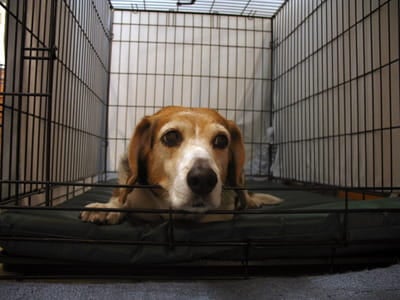
Is crate training appropriate?
It also might be prudent to teach your domestic dog how to be comfortably bars in a prophylactic, secure and relaxing area. With new children in the dwelling, unexpected visitors and the other disruptions that go with a changing household, it would exist beneficial if the domestic dog were able to be in some other location without showing distress or anxiety. Start by teaching the dog how to settle on command (come across Pedagogy At-home – Settle and Relaxation Grooming) in a comfortable and out of the way location. Once your dog can do this well, try placing a baby gate on the doorway while y'all are also in the room but occupied doing other things such as watching tv set or reading. It might help to provide your dog with a stuffed chew toy to make the time more enjoyable. Once your dog tin can stay with you in the room for a long period of fourth dimension, try sitting just on the other side of the gate. Finally, slowly move your chair downwards the hallway so that your dog can learn to remain calm and comfortable every bit you motion away. Be sure to vary the length of time your dog is confined prior to existence released, and only release the dog when it is calm and repose, never when it barks and whines. The goal is for your canis familiaris to learn how to be comfy in a dissever, safe and secure location away from you while you are home (see Crate Training – Positive Confinement – Why to Crate Train, Crate Training – Guide – How to Crate Train, and Crate Training– Synopsis).
Are there more than specific preparations that I can make equally the time of arrival approaches?
Some pets might become anxious of, or fearful toward, any of the new and different stimuli associated with the sights, sounds, or odors of the new child. New activities associated with childcare tin be practiced in front end of pets so that they can become familiar with them. Tape recordings or videos of babies crying (see Behavior Management Products), holding a doll wrapped in a coating, taking your canis familiaris for a walk beside a stroller or baby carriage, or even going through the motions of changing a diaper and applying infant powder will simulate some of the experiences to which your pet will soon be exposed. If at that place is any sign of feet associated with whatever of these situations, and so more formal reward-based training should be good and repeated until your pet exhibits no problems in the presence of the stimuli. By providing a favored chew toy, giving a food reward, or providing actress affection during these activities, your pet may actually learn to enjoy these new stimuli.
Once your pet shows no fearfulness or anxiety in some or all of these situations, you lot may want to enlist the help of some friends or relatives with young children. Dogs can be taken for a walk while the child is rolled in the stroller or railroad vehicle. A baby tin be carried around the habitation or nursed in the presence of the domestic dog, and children should be encouraged to play at the contrary end of a room or yard from where the dog is situated. The canis familiaris must be well controlled, preferably with a leash and head halter, and given nutrient rewards and/or play to proceed the association positive. A wire-meshed or plastic basket cage could also be applied to ensure additional safety, especially when existence exposed to new situations. Past the finish of the visit information technology may fifty-fifty exist possible to let the dog interact with the child merely but if it remains friendly and shows no fear or anxiety.
Is at that place anything special I should exercise for my cat to gear up for the arrival of a kid?
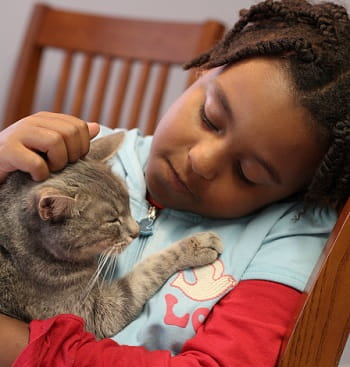
For cats, the most important adaptation is to the changes that will be needed in the true cat's home. Although fear and anxiety to the sights and sounds of a new babe are possible, adapting to changes in the household are often the most trying for cats. For example, obtaining new furniture, altering the cat's feeding, sleeping, elimination or play areas, and trying to go on the cat out of sure locations such as the crib, should all exist considered before the arrival of the baby. To reduce the chances of the cat marking new furniture, the showtime few introductions to the new areas should be well supervised. One time your true cat has investigated and rubbed against the new furniture, spraying is far less likely. Similarly, when the crib or cradle is get-go set up upwards, the cat may wish to marker the surface area, or investigate, or fifty-fifty to slumber in the crib. "Booby-trapping" areas can teach the cat to stay away from the areas of business well earlier the infant arrives; in many situations, synthetic pheromones (Feliway®) (see Fears, Phobias, and Anxiety) tin can help go along the cat at-home and prevent spraying.
"For cats, the almost of import adaptation
is to the changes that will exist needed in the cat'due south habitation."
Call back, each of these techniques is intended to help your cat adapt to changes in the household or lifestyle earlier the arrival of the baby. Once the baby arrives, there will be far less time to deal with the needs of your cat, and there will exist additional variables to which your cat will demand to adapt. Even if your cat does begin to exhibit fright or anxiety during this pre-arrival grooming, such feet will non be associated with the presence of the child. Your cat volition accept no reason to develop antagonism to the new child.
What should be done when the babe arrives?
Progress gradually, avoid any situations that might atomic number 82 to fear, feet or discomfort in the baby's presence and make all associations and experiences in the baby's presence positive. Maintain or even increase the amount and blazon of training, exercise, and play. When necessary, apply your pre-trained solitude area when you need to concentrate on the baby without interruption.
Even a curious and affectionate pet may have some problems adjusting to the new arrival. Jumping up in greeting when the baby is being carried, barking during the baby's sleep or nap times, raiding the diaper pail, licking the infant'southward confront, or cuddling up to sleep against an infant who is withal unable to shift position are merely a few of the concerns and potential bug that pet owners may need to bargain with. Go on your pet's nails well trimmed. Supervise all interactions between the pet and infant. Go on the pet out of the infant'south room during nap and sleeping times. Ensure that your dog is well controlled and responsive to obedience grooming commands. For some dogs, leaving a leash attached (preferably to a head collar), (run into Training Products – Head Halter Training and Preparation Products – Head Halter Preparation – Synopsis) is a useful way to ensure additional control.
"Every effort should be made
to allow the pet into the room for food,
play or affection when the baby is present."
The most important aspect of retraining is to reward the pet for obedient and relaxed behavior in the presence of the child. In many households, there will exist less fourth dimension and energy available for the pet. While focused on the kid, or attending to the chores associated with parenthood, the pet may be ignored, disciplined for approaching too close, or confined to a different surface area of the abode. Your pet may nevertheless receive its play, do, affection, food and attention, but often not until the babe is finally asleep or is nether the care of another family unit member. Many pets shortly acquire that the presence of the babe is a time for inattention or confinement, while the absenteeism of the babe is a cue for "good things" to happen. This must be reversed. Every effort should be made to allow the pet into the room for food, play or amore when the baby is present. Feed the pet when the infant is being fed, or accept another family member give affection to the pet, play with the pet, or practice some reward training (stay, go to your mat) when the child is in the room. Take your domestic dog outdoors for play or a walk when y'all are taking the child out. The goal is to teach the pet that positives or "expert things" are nearly likely to happen in the presence of the child and to avoid any negative association with the child.
What should be done if assailment arises?
Such beliefs is very upsetting, regardless of its reasons. An firsthand decision on whether to keep and work with the pet or remove information technology from the home must be made. Dogs targeting children may be motivated by fright, social conflicts, possessive, redirected, playful or predatory aggression. Such aggression (particularly predatory and fear) may arise immediately when the kid is brought into the dwelling, or may brainstorm as the child becomes more mobile (due east.1000., fearfulness, predation, possessive, play) or when the child grows a lilliputian older and begins to claiming the canis familiaris for space, attention and resources (fear, conflict, possessive, play). Cat aggression toward children tin be fear-induced, redirected, territorial, or play/predatory. For most assailment cases, especially those directed toward children, the guidance and advice of a behaviorist is strongly suggested since it will be necessary to make an authentic diagnosis, make up one's mind the prognosis (the chances of safe and effective treatment) and guide you through a handling program. Although some cases may be treated rapidly and safely, almost cases require all-encompassing precautions to prevent injuries and a great bargain of time, effort and commitment. Regardless of reason for assailment, biting dogs should be leashed (attached to the owner) preferably with a head collar, muzzled and closely supervised or crated in the presence of pocket-size children. Ambitious cats should be confined away from pocket-sized children except when they are in a carrier, on a leash and harness, or well supervised and either calm or otherwise occupied with food or toys.
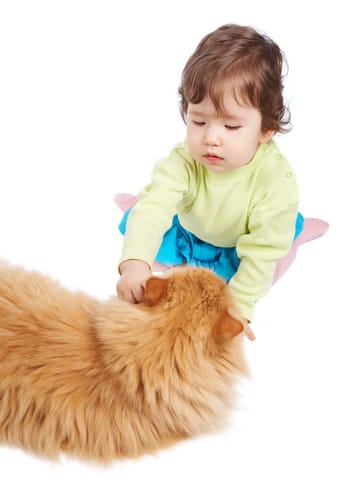
How can I teach my children to be safe around pets?
Although there are no rules that volition guarantee safety, there are important guidelines that can exist followed to reduce the chances of bug and the risk of injury. The starting time rule of thumb is to avoid doing anything to the canis familiaris that you might not desire your kid to exercise. This would include physical punishment, rough play, or teasing. Children must be taught how to interact with and handle their family pet including how to approach, pat or elevator small pets. Wherever possible, play sessions and training should include the children with the supervision of a parent. This can begin from the fourth dimension the dog is a puppy by attending puppy classes and obedience classes that include all members of the family. If the pet has not previously exhibited possessiveness of food or toys, the adults can practice with the children budgeted the dog at its food bowl, patting and giving favored treats, along with instruction the give or drop command for favored treats. It may exist best to utilise a leash and caput halter during this preparation if there is any concern that the dog might resist or become anxious.
While your dog may appear to tolerate or even enjoy handling from people of all ages, you must teach your child how to meet, greet and handle animals. The child will be safest if taught to avert hugging, tugging on the leash, collar or tail and handling effectually the eyes, ears, and muzzle. Even if the dog is familiar it is best to avoid reaching toward the head or face-to-face up greetings.
"Children must too be taught
that foreign pets may not
behave in the same way every bit their family pet."
Children must too exist taught that strange pets may non comport in the same way equally their family pet. A uncomplicated rule is that the child should NEVER approach another family's pet without being given permission and then to approach slowly and avoid reaching for the head and face. Children should be taught to avoid pets entirely if they are displaying any signs that might indicate fear (shaking, ears back, tail betwixt legs, hunker, trying to escape) or aggression (growling, showing teeth, barking, hair standing on end). Although most children would be tempted to run away from an aggressive domestic dog, they should be taught to stand up still similar a tree, with the arms against the trunk, and avert eye contact and yelling or screaming. If the kid is on the ground they should curl up and embrace their head and ears with their artillery and fists, and remain notwithstanding until the canis familiaris moves abroad. Any threatening dog or bite should be immediately reported to an adult.
Source: https://vcahospitals.com/know-your-pet/children-and-pets
0 Response to "Hospitals Where Babies React Animal Hospitals for Babies Lie in"
Postar um comentário